Meal planning for one person works best when you plan the meals you will actually eat at home, reuse a few ingredients in different ways, and decide what happens to the rest of each package before buying it. Start with three dinners rather than a fully scheduled week if a large plan feels unrealistic.
The example below turns a small set of groceries into three distinct evening meals. It is a planning method, not a calorie target or a prescription for how much to eat. Adapt portions, ingredients, and frequency to your appetite, preferences, allergies, and any individual dietary advice.
Key Takeaways
- Count real meals at home before choosing recipes.
- Give each perishable ingredient a second use or another clear destination.
- Compare package sizes with the amount you can realistically use.
- Plan cooling, storage, and reheating alongside the menu.
How many meals do you actually need to plan?
Open your calendar first. An evening class, a late shift, or dinner with a friend changes what needs to be available. A beautiful seven-day menu can create waste if it assumes you will cook on nights when you are rarely home.
Mark three kinds of occasion: time to cook, time only to assemble or reheat, and a meal already arranged elsewhere. Include a simple backup for the first two. This is not a promise that every evening will run to schedule; it tells you where prepared ingredients would help.
Count lunches separately. If you dislike eating the same food twice in a row, do not automatically count tomorrow’s lunch as the destination for tonight’s extra portions. A portion with no likely occasion is an unresolved decision, even if it fits neatly in a container.
Iowa State University Extension’s solo meal-planning discussion describes using planned leftovers and staying flexible. Keep that flexibility in your own plan: a convenient meal you enjoy is more useful than a complicated recipe you repeatedly postpone.
Which ingredients should you choose before shopping?
Check the fridge, freezer, and cupboard before searching for new recipes. Write down foods that are still safe and need using, what you already have enough of, and what you have actually enjoyed recently. Do not keep questionable leftovers simply because a new recipe might hide their appearance.
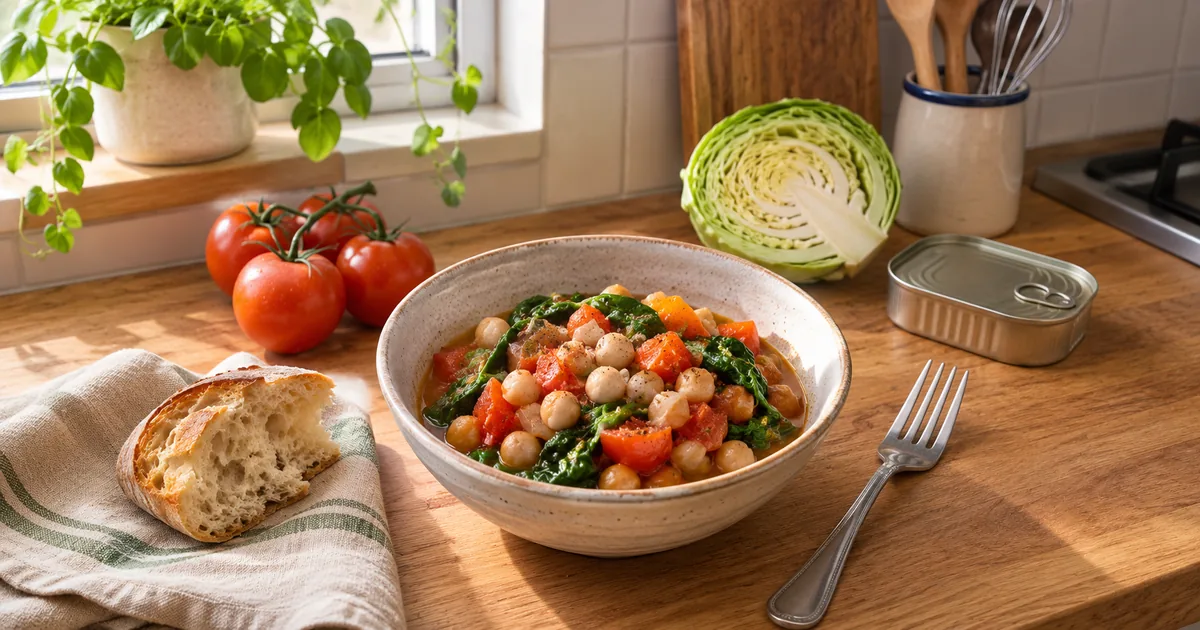
Build around a small number of ingredients that can change role. Chickpeas can be warmed in a tomato dish or added to a salad. Cabbage can provide crunch in a wrap or become a cooked side. Frozen vegetables let you take out the amount required without opening a large fresh bag.
That does not mean every ingredient suits every method. Check preparation instructions and a reliable recipe when uncertain. Choose overlapping ingredients with compatible cooking requirements rather than treating a meal plan as permission to improvise every food-safety decision.
Our pantry-staples guide can help you identify useful reserve foods. Keep the reserve small enough that you know what is there; an extra tin is helpful only if you will remember and use it.
What does a three-dinner plan for one look like?
Consider an original example for a cook who has bread, oil, and seasonings already. They buy one small cabbage, two tomatoes, a small bag of fresh spinach, a can of chickpeas, and a small tin of fish. The can sizes and appetite will determine the quantities used; the plan below deliberately avoids calling every package a single serving.
| Dinner | Main idea | Where ingredients overlap |
|---|---|---|
| Monday | Warm chickpeas, tomato, and spinach with bread | Use some drained chickpeas, one tomato, and part of the spinach. |
| Tuesday | Fish and cabbage toast with a side salad | Use the fish, some cabbage, the second tomato, and more spinach. |
| Wednesday | Remaining chickpeas with cooked cabbage and spinach | Use the refrigerated chickpeas and remaining spinach; cook a suitable amount of cabbage. |
Work through the decisions, not just the menu
Before opening the chickpeas on Monday, the cook checks the drained amount and decides how much is wanted for each of two dinners. The Wednesday amount goes promptly into a clean covered container in the refrigerator, following the product’s storage instructions. It is not left sitting beside the stove for the evening.
On Tuesday, the tin of fish is chosen in a size the cook expects to finish. If that size is unavailable, the cook changes the purchase or makes a separate safe storage plan for the excess. The shopping decision follows the meals, rather than creating another unexplained leftover.
By Wednesday, the spinach has a planned final use. The cabbage may still exceed three dinners. The cook therefore buys a smaller piece if available, shares some before use, or schedules another suitable dish while it remains safe. Calling the cabbage “used” because a few leaves went into dinner would conceal the remaining problem.
The outcome is three different meals and a visible decision about the main extra ingredient. This is a menu illustration, not a nutritionally analyzed complete diet. Adjust the meals or add other foods according to your needs.
How do you turn the menu into a realistic shopping list?
List the amount you expect to use beside the quantity sold. For produce, compare loose items, smaller packs, and frozen alternatives. The lowest unit price is not automatically the lowest cost for you if much of a large package goes unused.
| Shopping question | Practical response |
|---|---|
| Will I use this whole fresh bag? | Choose a smaller bag or a suitable frozen alternative. |
| Does the recipe make four portions? | Scale it where the method allows, or assign the extra portions. |
| Is this ingredient used once? | Choose another dish that uses it, or a recipe without it. |
| Is my fridge or freezer already full? | Buy less and plan a shorter shopping interval. |
Use our recipe-scaling guide when a recipe serves more people than you need. Recheck pans, food depth, and cooking separately; halving ingredient quantities does not mean halving the cooking time.
Keep one easy reserve meal on the list if your kitchen does not already have one. It could be a familiar shelf-stable option plus frozen vegetables. Make it something you genuinely want to eat, so a late meeting does not leave you choosing between an elaborate plan and no workable dinner.
How should leftovers fit into the plan safely?
A leftover needs a storage plan as well as a future recipe. The following general guidance uses U.S. food-safety sources, checked on 17 November 2026. Follow product instructions and any more specific local guidance for the food involved.
USDA guidance recommends prompt refrigeration at 40°F/4°C or below, using shallow containers, and using refrigerated leftovers within three to four days or freezing them for longer storage. Do not leave perishable food out for more than two hours, or one hour above 90°F/32°C.
FoodSafety.gov advises reheating leftovers to 165°F/74°C. Use a food thermometer to check, rather than assuming that a hot container means the food is hot throughout. Its guidance also emphasizes clean handling and separating raw animal foods from ready-to-eat ingredients.
Label containers with the food and date. If a plan changes, act while the food is still safe instead of waiting until its storage window has passed. Freezing is not a way to rescue food that has already been handled unsafely. When you cannot establish that food is safe, discard it.
What should change when your week changes?
If Wednesday becomes a dinner out, look at the ingredients assigned to it immediately. You may move that meal earlier, use an appropriate safe freezing method, share suitable unopened food, or reduce the next purchase. The right response depends on the food’s condition and storage history.
Without a freezer, shorten the planning horizon. Buy fewer perishables, use smaller cans or packs when practical, and keep safe shelf-stable options for gaps. Batch cooking is one option, not a requirement for feeding one person well.
After the three dinners, note what remained and why. Too much cabbage suggests a buying-quantity problem. Untouched spinach because you disliked the meal suggests a preference problem. A skipped dinner after an unexpectedly late shift suggests the need for a faster backup.
For additional meal ideas, browse our practical dinner guide or the description of The High Protein Recipe. Choose ideas that fit your schedule and requirements rather than replacing a workable plan with a much larger shopping list.
Conclusion
Plan your next three dinners and write one destination beside every perishable item on the shopping list. Check those destinations against your calendar and storage space. After eating, revise the quantities using what actually happened, not the week you hoped to have.
Frequently Asked Questions
Do I need to plan breakfast and lunch at the same time?
Only if that helps with shopping and preparation. You can keep familiar breakfasts and lunches while learning to plan dinner. Include their ingredients in the shopping total, though, so the tomatoes or bread assigned to dinner are not already used elsewhere.
What if I dislike reheated meals?
Plan ingredient reuse rather than repeated finished dishes. A vegetable may appear raw in one meal and cooked in another, where appropriate. Buy smaller quantities of foods that you only enjoy freshly prepared. The goal is a workable pattern for your tastes, not training yourself to accept food you consistently dislike.