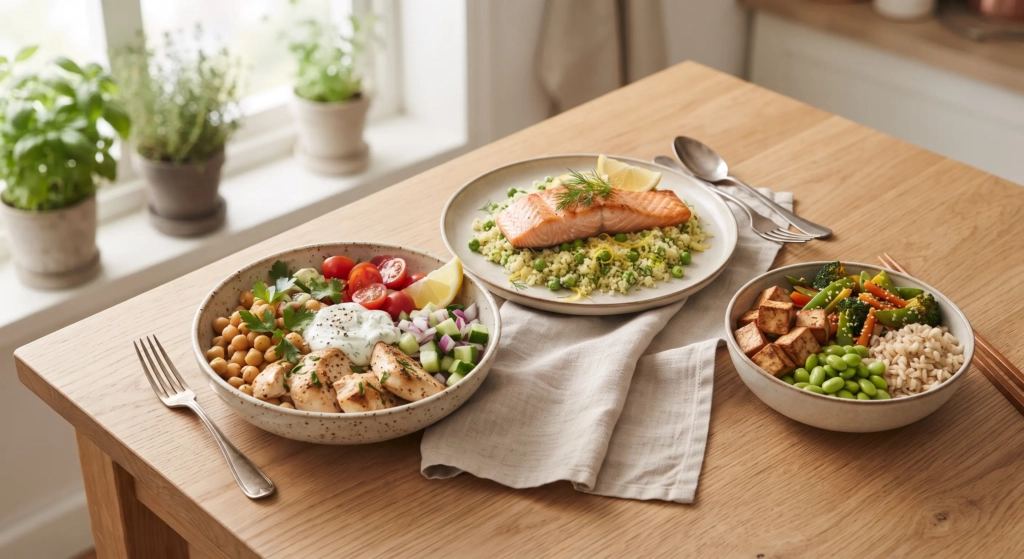
Easy high-protein dinners include chicken and chickpea bowls, turkey tacos, salmon with couscous, tofu and edamame stir-fries, and tuna and white bean salads. Start with a substantial protein ingredient, add vegetables and a convenient grain or potato, then finish with something flavorful: lemon, salsa, pesto, or a spoonful of seasoned yogurt.
The best choice depends on what your evening looks like. When cooking feels manageable, a skillet meal can work well. When you arrive home hungry and tired, a dinner assembled from ready-to-eat ingredients may be the more realistic answer.
You do not need an elaborate meal plan or a fridge full of identical containers. A few adaptable combinations can make dinner easier without making it boring.
What Makes a Dinner Practical and Protein-Rich?
A useful weeknight dinner has three qualities: a clear protein source, manageable preparation, and ingredients you actually enjoy.
Build around chicken, fish, eggs, tofu, beans, lentils, or another protein-containing food. Make that ingredient a meaningful part of the meal. A scattering of chickpeas or a little grated cheese may add flavor, but it should not be mistaken for a substantial protein portion.
Then consider the whole plate. Vegetables bring variety; rice, pasta, bread, or potatoes make the meal more complete; and a dressing or sauce helps everything taste good together.
Practicality also means counting the hidden work. A recipe may cook quickly but still require defrosting, chopping, marinating, and several pans. For busy evenings, look for:
- Ingredients that are ready to use or need little preparation.
- One main cooking task.
- Substitutions that will not derail dinner.
- A manageable amount of washing up.
The ideas below are flexible meal templates, not nutritionally analyzed recipes. Protein content depends on quantities, brands, and substitutions. Use package information if you want to calculate your own portions.
10 Easy High-Protein Dinner Ideas
1. Lemon Chicken and Chickpea Bowls
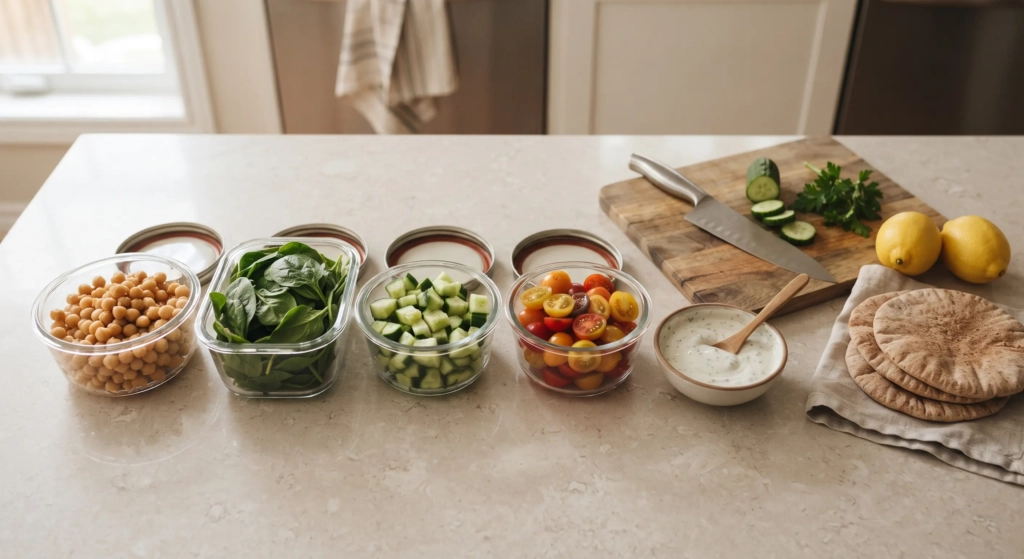
Ingredients: Ready-to-eat cooked chicken, canned chickpeas, cucumber, cherry tomatoes, plain Greek yogurt, lemon, olive oil, and pita bread or ready-to-heat grains.
How to make it: Drain and rinse the chickpeas. Chop the cucumber and tomatoes, then toss them with lemon juice and olive oil. Add a generous serving of shredded chicken. Stir lemon zest and black pepper into the yogurt and spoon it over the bowl.
Serve with pita or grains prepared according to their packaging.
Make it work for you: Replace chicken with ready-to-eat baked tofu. If dairy is unsuitable, use lemon-tahini dressing.
This is especially useful when you want dinner without switching on the hob. Keep chilled chicken refrigerated until preparation and follow its use-by and storage instructions.
2. Turkey and Black Bean Tacos
Ingredients: Ground turkey—also called turkey mince—canned black beans, small tortillas, shredded cabbage, salsa, ground cumin, smoked paprika, and oil.
How to make it: Heat a little oil in a skillet. Add the turkey, break it into small pieces, and season with cumin and paprika. Cook thoroughly, then stir in drained black beans and enough salsa to keep the filling moist.
Warm the tortillas and fill them with the turkey mixture and crunchy cabbage.
Make it work for you: Ground chicken works well. For a meat-free filling, use crumbled firm tofu and beans, adjusting the seasoning.
Let everyone add their own salsa or chili sauce. That keeps one dinner adaptable to different tastes without preparing separate meals.
3. Salmon with Peas and Lemon Couscous
Ingredients: Salmon fillets, couscous, frozen peas, lemon, olive oil, and parsley or dill.
How to make it: Cook the salmon in a skillet, oven, or air fryer, following suitable appliance guidance and checking doneness. Meanwhile, prepare the couscous according to its packet instructions and cook the peas separately.
Fluff the couscous with a fork, fold in the peas, and add lemon juice, olive oil, and herbs. Place the salmon on top.
Make it work for you: Substitute another fish fillet, accounting for differences in thickness and cooking requirements. Use microwaveable rice or quinoa if you need a gluten-free alternative.
The useful shortcut is the side dish: couscous needs little attention, leaving you free to focus on the fish.
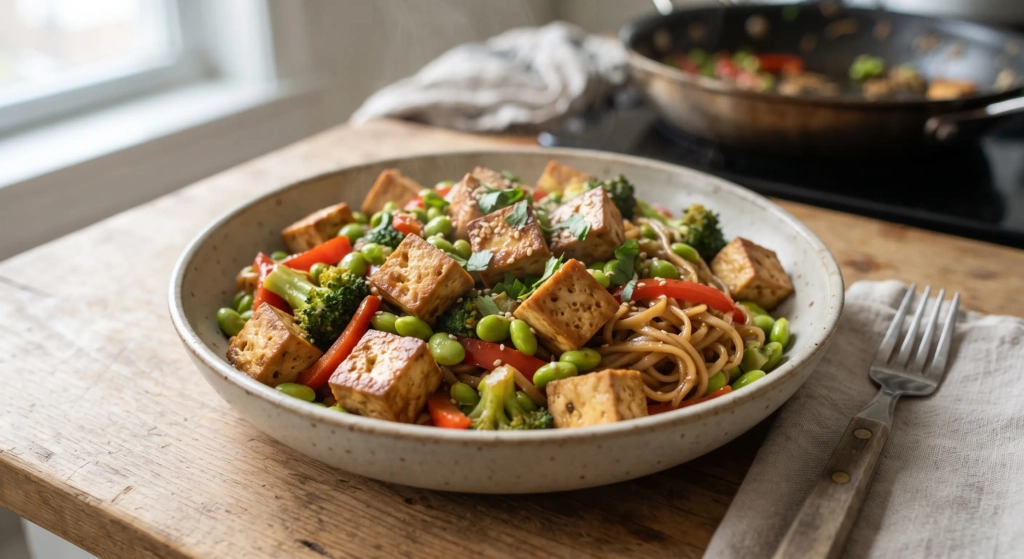
4. Tofu and Edamame Stir-Fry
Ingredients: Firm tofu, frozen shelled edamame, a bag of stir-fry vegetables, soy sauce, ginger, garlic, oil, and noodles or rice.
How to make it: Pat the tofu dry and cut it into cubes. Brown it in a lightly oiled skillet, working in batches if needed. Add the vegetables, ginger, and garlic, then cook until the vegetables reach your preferred texture.
Prepare the edamame according to its packet instructions and stir it through. Finish with soy sauce and serve with noodles or rice.
Make it work for you: Broccoli, sliced peppers, or shredded cabbage can replace the vegetable mix. Use suitable gluten-free tamari when necessary.
Combining tofu and edamame gives the meal two substantial protein ingredients, while the vegetables provide crunch and color.
5. Tuna and White Bean Salad
Ingredients: Canned tuna, canned white beans, cucumber, tomatoes, red onion, parsley, lemon juice, olive oil, and wholegrain bread.
How to make it: Drain the tuna and rinse the beans. Combine them with chopped cucumber, tomatoes, a little finely sliced onion, and parsley. Dress with lemon juice and olive oil, then season to taste.
Serve with bread for a dinner that requires no cooking.
Make it work for you: Canned salmon is another option. For a vegetarian version, replace the fish with chopped cooked eggs, or use ready-to-eat tofu.
If raw onion tastes too strong, leave it out. The combination should suit your appetite, not become another list of rules. Add the dressing just before eating if you prefer the vegetables crisp.
6. Spinach and Cottage Cheese Scramble on Toast
Ingredients: Eggs, cottage cheese, spinach, cherry tomatoes, wholegrain bread, black pepper, and a little oil or butter.
How to make it: Soften the tomatoes in a skillet, then add the spinach and let excess moisture cook away. Beat the eggs, pour them into the pan, and stir gently.
Fold in cottage cheese as the eggs begin to set. Continue cooking until the eggs are fully set and the mixture is hot, then serve on toast.
Make it work for you: Mushrooms can replace tomatoes. If you dislike the texture of cottage cheese, blend it into the eggs before cooking.
Eggs are not limited to breakfast. This is a useful dinner when the fridge contains a few vegetables but little else.
7. Red Lentil Pasta with Tomato and Chicken
Ingredients: Red lentil or chickpea pasta, ready-to-eat cooked chicken, canned chopped tomatoes, spinach, garlic, olive oil, and dried oregano.
How to make it: Cook the pasta according to its packet instructions. Meanwhile, gently cook garlic in olive oil, add the tomatoes and oregano, and simmer until the sauce tastes rounded.
Stir in shredded chicken and heat it thoroughly. Add spinach, let it wilt, and combine everything with the drained pasta. Loosen with a little pasta water if needed.
Make it work for you: Replace chicken with white beans or crumbled tofu. Ordinary pasta also works; the chicken or alternative remains central to the meal.
Check the pasta early. Legume-based varieties can soften differently from wheat pasta.
8. Garlicky Prawns with White Beans
Ingredients: Peeled shrimp or prawns, canned white beans, cherry tomatoes, spinach, garlic, olive oil, lemon, and crusty bread.
How to make it: If using frozen prawns, thaw them safely according to the packaging. Cook garlic and tomatoes in a little oil, then add the prawns and cook thoroughly.
Stir in drained beans and spinach. Add a splash of water if the pan looks dry, and finish with lemon juice once everything is hot.
Make it work for you: Boneless fish pieces can replace prawns, with the cooking method adjusted accordingly. For a seafood-free version, use chicken cooked separately.
The beans give the pan a soft, substantial base, while lemon keeps the finished dish bright. Bread is useful for the juices.
9. Jacket Potato with Chicken and Yogurt
Ingredients: A baking potato, ready-to-eat cooked chicken, plain Greek yogurt, spring onion, black pepper, and a side salad.
How to make it: Scrub and pierce the potato, then microwave it following your appliance’s guidance until tender throughout. Split it carefully to release the steam.
Mix shredded chicken with yogurt, sliced spring onion, and pepper. Spoon the chilled filling onto the hot potato and serve immediately with salad.
Make it work for you: Substitute canned salmon or white beans for the chicken. Add mustard or lemon juice if the filling needs more flavor.
A microwave is helpful here because an oven-baked potato needs more advance planning. Handle the cooked potato carefully; trapped steam can burn.
10. Smoky Lentil and Turkey Skillet
Ingredients: Ground turkey, canned or pouched cooked lentils, canned chopped tomatoes, diced pepper, smoked paprika, olive oil, and rice or bread.
How to make it: Soften the pepper in oil. Add the turkey, break it up, and cook thoroughly. Stir in smoked paprika, tomatoes, and drained lentils.
Simmer until the mixture is hot and has thickened to your liking. Serve with rice or bread.
Make it work for you: Use crumbled firm tofu instead of turkey for a meat-free version. Chopped courgette or zucchini can replace the pepper.
This is a sensible meal to cook in a larger quantity if you already have storage containers ready. Portion leftovers promptly rather than leaving the skillet on the stove.
A Food-Safety Note for These Dinners
A thermometer is more reliable than judging meat by color. US guidance specifies 165°F/74°C for chicken and turkey, including ground poultry, and 165°F/74°C for reheated leftovers. For fish, US guidance specifies 145°F/63°C; recommendations vary internationally, so follow your local authority’s advice where it differs.
Keep raw meat and seafood separate from ready-to-eat ingredients, and clean utensils and preparation surfaces between tasks.
For leftovers, divide food into shallow containers and refrigerate promptly. USDA guidance sets a maximum of two hours at room temperature, reduced to one hour above 90°F/32°C. Do not leave a large pan out waiting for it to cool completely.
Rice needs particular care. UK Food Standards Agency guidance advises cooling it quickly, ideally within one hour, refrigerating it, and using it within 24 hours. Reheat until steaming hot throughout.
A Small Shopping Plan That Makes Dinner Easier
Choose three dinners before shopping, then look for overlapping ingredients.
Chicken, chickpeas, yogurt, spinach, and tomatoes can support several meals above. You might make chicken bowls first, use spinach in a scramble, and finish the chicken in tomato pasta while it remains within its safe storage period.
Build your list around four groups:
- Protein ingredients: Pick two main options and a cupboard backup, such as canned beans or fish.
- Vegetables: Combine fresh produce with a frozen option.
- Bases: Keep bread, pasta, potatoes, or convenient grains available.
- Flavor: Choose a few ingredients you use repeatedly, such as lemon, salsa, garlic, and smoked paprika.
Prepare the parts that remove friction: wash vegetables, mix a dressing, or portion ingredients. You do not have to cook every meal in advance.
Freeze suitable extra portions promptly if you will not eat them soon. Label containers so you know what needs using.
Common Mistakes That Make Weeknight Cooking Harder
Choosing too many unrelated recipes. Ten dinners with different herbs, sauces, and vegetables can create an expensive shopping list. Repeat ingredients while changing the seasoning or format.
Treating the protein ingredient as the whole meal. Chicken alone may leave dinner feeling unfinished. Add vegetables, a satisfying base, and a sauce you enjoy.
Forgetting the preparation before cooking. Frozen meat, unwashed vegetables, and a complicated marinade all affect when dinner reaches the table.
Using tiny toppings as the main protein source. Seeds and cheese can complement a meal, but portion size matters. Build around a substantial main ingredient first.
Planning for an ideal evening. Keep at least one dinner that needs little more than opening, draining, and assembling. It is easier to use a backup when you have already chosen it.
Make the Next Dinner Easier
Start with two meals from this list: one you can cook comfortably and one you can assemble when you are tired. Buy ingredients for both, and notice which parts of the preparation feel easy enough to repeat.
If you enjoy using an air fryer, you can also explore Air Fryer Protein in 20 at BestDigiBooks as an optional next stop for meal inspiration.
A useful dinner routine grows from meals that fit your kitchen, budget, and appetite. You only need a few dependable options to begin.
Frequently Asked Questions
What is an easy high-protein dinner when I do not want to cook?
Try tuna and white bean salad, or a bowl of ready-to-eat chicken, chickpeas, and chopped vegetables. Add bread and a simple dressing. Check that any prepared ingredients are ready to eat and have been stored correctly.
Can a vegetarian dinner provide plenty of protein?
Yes. Build around tofu, edamame, beans, lentils, eggs, or dairy foods, according to your preferences. Tofu with edamame and eggs with cottage cheese are practical combinations. The amount of protein still depends on the portions and products used.
Do I need protein powder in my dinner?
No. The meals here use ordinary food ingredients. Protein powder is unnecessary for preparing a protein-focused evening meal, and it will not solve practical problems such as missing vegetables, poor seasoning, or an inconvenient cooking routine.
How can I make these dinners more affordable?
Compare local prices and use beans, lentils, eggs, frozen vegetables, and canned fish where they offer good value. Stretch meat across a dish by combining it with pulses, while keeping portions substantial enough for the number of people eating.
Do I need an air fryer for quick high-protein dinners?
No. These ideas include skillet meals, microwave cooking, and no-cook combinations. An air fryer may be convenient for some ingredients, but the equipment you already use confidently is a good starting point.