To thicken soup without cream, you can reduce excess liquid, mash some of its cooked ingredients, or add a compatible cooked ingredient such as beans or potato. Choose the method after tasting the broth. Reduction suits a watery, weak-tasting soup; it can make an already salty or strongly flavored soup harder to balance.
The useful question is not simply what will make the pot thicker. It is what will give this particular soup the body you want without losing its character. Here is a practical way to decide, including an illustrative small-portion test you can adapt at home.
Key Takeaways
- Taste before reducing: less water also means more concentrated flavor.
- Use soft cooked ingredients already in the soup when their flavor fits.
- Test an addition in a small portion before committing the whole pot.
- Stop while the soup is comfortably spoonable, then reassess before serving.
What should you check before choosing a thickener?
First decide whether the soup is actually unfinished or simply different from what you expected. A clear noodle broth does not need the body of a blended vegetable soup. If you want a light broth with distinct pieces, a small adjustment may serve it better than turning everything into a puree.
Taste a spoonful that has cooled enough to judge comfortably. Note three separate things: flavor strength, the amount of liquid compared with solids, and how much texture you want to preserve. A pot can contain plenty of vegetables yet still feel thin between bites.
| What you notice | First option to consider | Reason to pause |
|---|---|---|
| Weak flavor and excess liquid | Gentle uncovered reduction | Vegetables may overcook during a long reduction |
| Good flavor with soft beans or potatoes | Mash a small portion | Mashing changes the appearance and texture |
| Good flavor but few useful solids | Add a compatible cooked ingredient | A new ingredient changes the balance |
| A deliberately clear broth | Leave it light or adjust serving proportions | Heavy thickening may defeat the intended style |
Set out the ladle, masher, tasting bowl, and any proposed addition before changing the pot. Our guide to mise en place at home explains this kind of preparation. It is especially useful when several possible fixes are within reach and you need to choose one.
When is reducing the liquid the right fix?
Reduction means allowing water to evaporate from the uncovered soup. It adds no new ingredient, which makes it a reasonable first thought when the broth tastes diluted and the recipe already contains the flavors you want.
Use a controlled simmer and stir as needed for the ingredients and pan. Taste periodically rather than relying on a fixed number of minutes. Surface area, pot size, heat, and the starting amount of liquid all affect the rate. Keep watching tender vegetables or pasta that may soften more than you want.
Good Food’s soup-thickening guide recommends driving off water when the flavor is weak. That qualification matters: a broth that already tastes strongly seasoned needs a different decision.
If your vegetables are ready but the liquid needs concentrating, you may choose to remove some solids temporarily while adjusting the broth, then return them. Use suitable utensils and avoid splashes. If the result becomes too intense, stop reducing; another thickening method cannot undo concentrated salt.
How can the ingredients already in the soup add body?
Look for soft, fully cooked beans, potatoes, or other suitable starchy ingredients. Mash a small amount with a little broth, then stir it back in. This redistributes solids through the liquid while leaving the rest of the pieces intact.
Choose how much texture to keep
A potato masher gives a coarser result and can be easier to control than making a smooth puree. Begin with a small portion so you can still recognize the soup’s original character. If the pieces are not tender enough to mash readily, finish cooking them before treating them as a thickener.
Keep ingredients you want distinct out of the mashed portion. For example, you might mash white beans while leaving leafy greens or pasta whole. Our suggestion is a decision about texture, not a requirement to process everything in the pot.
If you prefer a blender, follow that appliance’s instructions for hot liquids, batch size, and venting. Never assume a sealed personal blending cup is suitable for hot soup. KitchenAid’s blender-soup guidance emphasizes checking equipment suitability and handling steam. A manual masher avoids needing a blender for this method.
Which pantry additions fit different soups?
A new thickener becomes part of the recipe. Think about its flavor as well as its thickening ability. Cooked white beans can suit a tomato-and-vegetable soup, while a little soft cooked potato may fit a potato-based soup more naturally than bread would.
Softened bread can give a rustic soup body, but its crust, seasoning, and grain affect the result. A strongly flavored loaf may be an intentional addition in one pot and a distraction in another. Check ingredient labels and diners’ needs before choosing any addition; avoiding cream alone does not make a soup dairy-free, gluten-free, or vegan.
| Possible addition | Where it may fit | What changes |
|---|---|---|
| Mashed cooked white beans | Tomato or hearty vegetable soup | Adds bean flavor and an opaque body |
| Mashed cooked potato | Potato-led or compatible vegetable soup | Makes the broth more substantial |
| Softened plain bread | Rustic tomato-style soup | Changes flavor and may contain wheat or other allergens |
| A little suitable cooked rice | Some blended vegetable soups | Adds starch and softens the texture |
Use ingredients that are already properly cooked rather than treating an almost-finished soup as a shortcut for cooking dried beans or grains. The Pantry-First Kitchen is a related catalog resource for thinking about usable ingredients before buying more.
Powdered starches are another option when a recipe calls for them, but they are not interchangeable with these additions. Serious Eats discusses how a flour-based fix can make a light soup feel too sauce-like. Choose according to the intended texture, rather than adding whichever powder is closest.
How does a small-portion test work in practice?
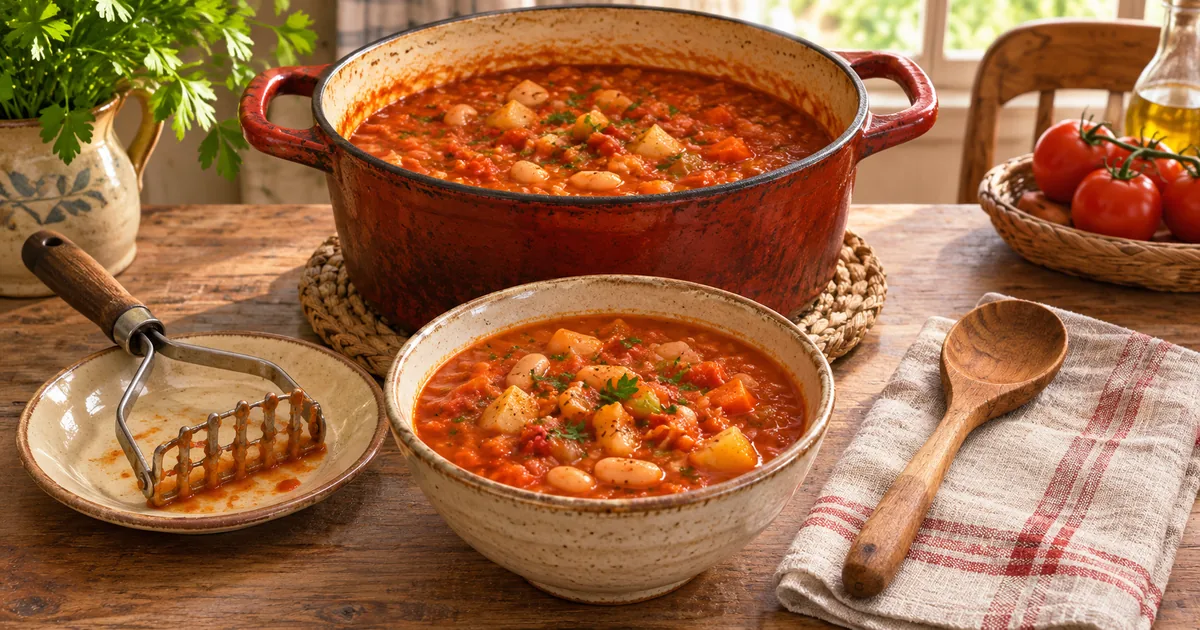
Imagine a finished tomato-and-white-bean soup that tastes balanced but feels watery. This is a worked example of a decision process, not a tested recipe or a promise that every batch will respond identically.
Compare an unchanged sample with one adjustment
Ladle a small serving into each of two bowls, including similar proportions of beans and broth. Leave the first unchanged. In the second, mash some beans against the side with a spoon and stir them through. Let both reach a comfortable tasting temperature so heat does not obscure the comparison.
Ask whether the adjusted sample has enough body, whether it still tastes like the same soup, and whether you miss the whole beans. If it meets all three aims, mash a modest portion of the beans in the main pot, stir, and reassess. You do not need to puree the whole batch.
If the sample becomes heavy or loses the texture you like, do not apply it to the pot. Try a smaller adjustment in a fresh sample, or accept the lighter broth. The useful result is a clear decision before a small experiment becomes a large irreversible change.
Keep a brief note such as ‘mashing a few existing beans improved body; keep most whole.’ It is more helpful for the next batch than writing ‘add lots of thickener,’ which leaves both the ingredient and the stopping point unclear.
How do you avoid an over-thick or awkward result?
Change one thing at a time. Combining reduction, mashed solids, and a new starch before tasting makes it difficult to know which adjustment helped. It also removes the chance to stop after the first useful change.
Judge a spoonful as well as the appearance in the pot. Soup can look loose while moving but feel substantial when eaten with its solids. Conversely, a glossy surface can hide a texture that feels pasty. The target is the eating experience you intended.
If a change makes the soup too thick, add a little compatible liquid, stir thoroughly, and taste again. Choose the liquid carefully: strongly salted stock can solve thickness while creating another problem. For future quantities, scaling a recipe helps keep ingredients and liquid in proportion rather than relying on an overloaded pot.
Conclusion
For your next thin soup, taste first and choose one likely fix. Test mashing a small portion if the flavor is already balanced and suitable cooked ingredients are present. Apply only the amount that improves the bowl you actually want to eat.
FAQ
Will soup become thicker while it stands?
Some soups containing starches continue to change as ingredients absorb liquid and the soup cools. Recheck consistency rather than assuming the hot pot represents the final serving texture. If you plan to portion leftovers, our guide to freezing soup in portions covers that separate storage task.
Can I keep a soup completely smooth without adding cream?
Yes, suitable soft cooked vegetables or beans can produce a smooth base when processed appropriately. However, the ingredient, appliance, and desired consistency all matter. Start with a recipe designed for a smooth texture, and follow your blender’s hot-liquid instructions rather than assuming every soup or machine behaves the same way.