
Most balcony vegetable gardens need several hours of direct sun, but the amount depends on the crop. Tomatoes and peppers generally need a sunnier position than leafy greens. Measure the light at the actual planting spot before choosing vegetables, because a bright balcony can still spend most of the day in building shade.
This guide turns balcony vegetable garden sunlight into a practical planting decision. You will record separate sunny periods, compare two positions, and decide where a small first crop makes sense. The goal is a manageable experiment suited to your conditions, rather than filling every available corner with plants.
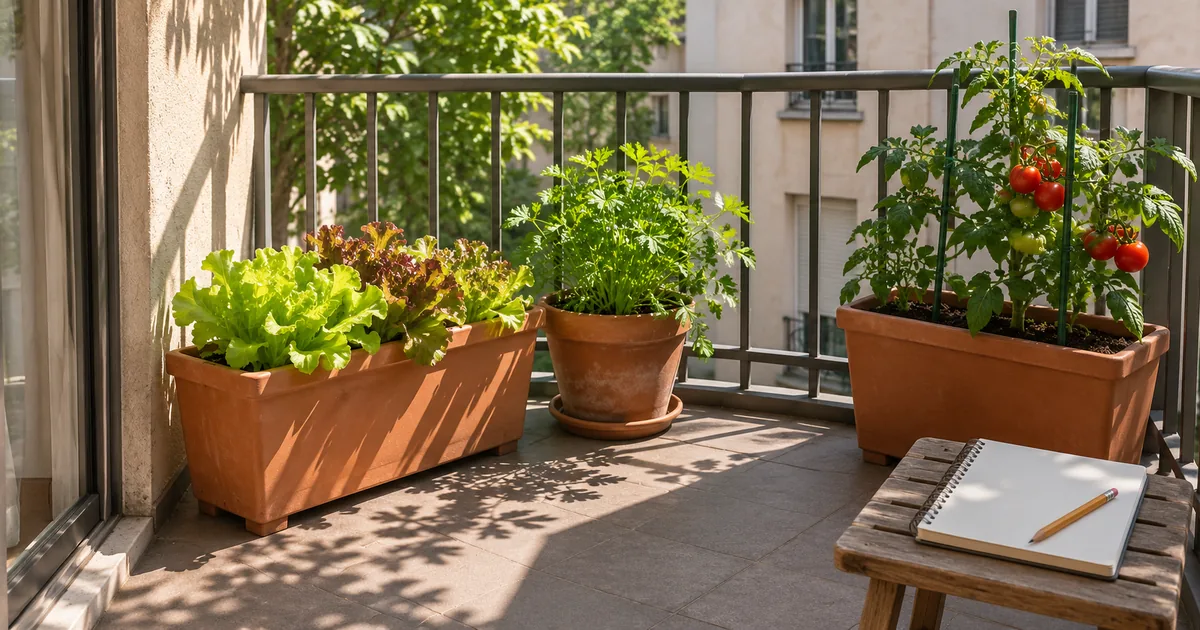
Key Takeaways
- Count direct sunlight at leaf height, rather than the hours the balcony looks bright.
- Use crop-specific light requirements as a starting point, then check season and local climate.
- Measure separate positions: a railing-side pot and a sheltered corner can receive very different light.
- Start with a small trial and record growth before buying more containers.
What counts as direct sunlight on a balcony?
Direct sunlight reaches the plant without a roof, wall, or another building blocking the sun. A clear shadow from an ordinary object is a useful observation clue. A bright view of the sky is valuable light, but it does not automatically equal direct sun.
Check where mature leaves will sit. A solid balcony wall may shade a low container while the upper part of a taller plant receives sunshine. An overhanging balcony can block high summer sun even when the open edge appears exposed.
Treat labels such as south-facing as clues, not a completed audit. Their meaning depends on hemisphere, surrounding buildings, and the time of year. A compass direction cannot tell you when the building opposite starts casting its shadow.
Observe from inside the balcony. You do not need to lean outside the railing, hang a device over the edge, or move a heavy planter to gather useful information.
How can you measure the sun without special equipment?
Choose two or three possible positions and label them A, B, and C in a notebook. On a reasonably clear day, check those positions regularly from morning to evening. Record when each enters and leaves direct sun. More frequent checks near a moving shadow give a better estimate than one midday photograph.
- Draw a simple plan showing walls, roof, railing, and possible container positions.
- Record the date and whether clouds interrupted observations.
- Write down each interval of direct sun for each position.
- Add the intervals, keeping uncertain or cloud-obscured periods marked as uncertain.
- Repeat when possible, especially before a different growing season.
You can use photographs as reminders, but keep the camera viewpoint consistent. A picture of a sunny floor does not establish that the leaves above it were sunny too. Record the plant-height observation alongside the picture.
If you are away during daylight hours, sample on a day off or ask someone to record the same marked positions. A single measurement is a snapshot, not a year-round promise. Keep the limitations visible in the notebook.
Which vegetables match the sunlight you measured?
The University of Maryland Extension container guide gives a useful starting range: six to eight hours of direct sun for warm-season fruiting crops such as tomatoes and peppers, and three to five hours for cool-season leafy crops such as lettuce and spinach. These are planning ranges, not guarantees of harvest.
The RHS guidance on positioning vegetables also distinguishes shade-tolerant choices from fruiting crops whose performance may be reduced in shade. Check the requirements of the particular crop and variety, then match those to your local growing season.
| Observed position | Possible first trial | Decision to check |
|---|---|---|
| Around 6–8 hours of direct sun | A compact tomato or pepper | Suitable season, mature root space, and exposure to heat |
| Around 3–5 hours of direct sun | Lettuce or another locally suitable leafy crop | Temperature, variety, and expected slower growth |
| Very little direct sun | A cautious trial only after local advice | Whether another position or a different project is more realistic |
Do not fill a low-light space with tomatoes simply because the container fits. Equally, do not assume lettuce is a solution to every shaded corner: temperature, season, and the remaining light still matter. A small test protects your budget and leaves room to adjust.
What does a complete two-position sunlight audit show?
Record the intervals before choosing the crop
Consider this fictional example, used to demonstrate the method. Position A receives direct sun from 9:00 to 11:30 and again from 14:00 to 16:00. Its total is four and a half hours. Position B receives direct sun from 9:30 to 16:30, a total of seven hours. Both were observed on the same clear day.
The gardener initially wanted two tomato plants. The records change that decision: A becomes a trial position for a leafy crop suited to the local season, while B becomes the candidate tomato position. The observation does not establish which variety or container size is appropriate; those remain separate checks.
Finish with a placement decision
Before buying, the gardener checks access to water, building rules, and whether containers will obstruct the walkway. If B is unsafe or unsuitable for a large pot, the answer is to change the crop plan, not place a tomato outside the railing.
The result is one modest leafy-green trial and, if the other checks pass, one compact tomato trial. Our balcony vegetable garden guide can help with the next decisions: container sizing, crop selection, and a planting plan. Keep the audit beside that plan so the light assumptions remain visible.
Why should you recheck sunlight, heat, and season?
A balcony’s usable light changes as the sun’s path changes. Buildings and overhead slabs can create very different shadow patterns across the year. Recheck before planning a new seasonal crop rather than relying on a photograph from months earlier.
Sun duration is also different from heat exposure. A reflective wall or paved surface can make a container position hot, while wind can increase drying. A seven-hour position may therefore require more observation than a calmer, cooler one.
The RHS container-growing guide identifies drying out and insufficient root space as common problems. If a plant wilts, do not immediately conclude that it needs more sun. Check moisture and container suitability, and seek crop-specific advice when the cause is unclear.
Keep notes about weather and plant response without diagnosing every change. Useful entries include whether leaves were shaded by a neighboring plant, whether the growing medium was dry, and whether a different building shadow appeared. That record is more informative than simply writing ‘bad spot.’
Which placement mistakes are easiest to avoid?
The first mistake is measuring the empty balcony and ignoring the mature garden. Tall plants and supports may shade shorter crops. Leave space to see how the arrangement changes as plants grow, and keep access for watering and inspection.
The second is treating moving containers as a daily requirement. Pots become heavier when filled and watered. Choose a safe, practical position first; check building load and placement rules where relevant. Do not rely on carrying heavy containers around to chase every patch of sunshine.
The third is changing several things after disappointing growth. If you replace the crop, pot, growing medium, and position at once, you will learn little about which change mattered. Where appropriate, compare a small trial with your original notes before expanding.
Finally, choose vegetables you will use. A suitable patch of light is an opportunity, not an obligation to grow a crop you dislike. Once you harvest, planning meals around ingredients you already have can help turn a modest supply of greens into useful dinners.
Conclusion
Mark two possible container positions today and record their next clear-day sunlight intervals. Match one crop to the better-documented position, check local seasonal and container requirements, and begin small. Your first useful result is a justified planting decision, even before the first harvest.
Frequently Asked Questions
Can a phone light-meter app replace the audit?
An app may help compare brightness at a moment, but its reading is not a record of hours of direct sun. Devices, sensors, and apps vary. Use it as a supplementary observation if you wish, while keeping a time-based record and the crop’s own growing guidance as the basis for your decision.
Does light through a window count the same as an outdoor balcony?
Treat an indoor windowsill as a different growing environment. Glass, distance from the window, indoor temperature, and ventilation change conditions. Do not transfer an outdoor balcony assessment unchanged to an indoor crop. Look for guidance for that specific plant and indoor position, then test on a small scale.