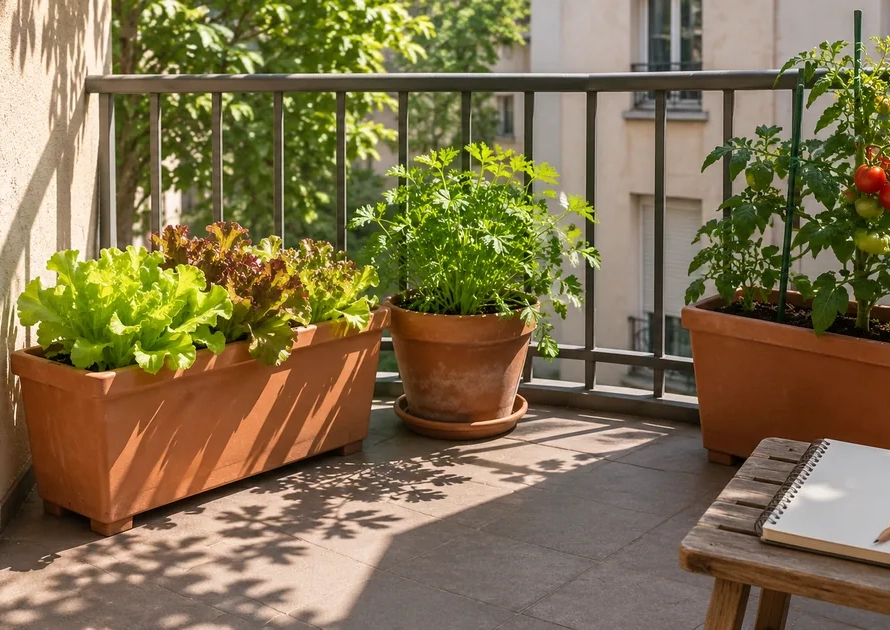
Vegetables need containers that provide enough usable growing depth and volume for their mature size. A small nursery pot tells you little about the space the plant will eventually require. Choose the crop and variety first, then check the pot’s dimensions, capacity, drainage, and practical fit before buying.
This guide explains vegetable container sizes without treating a single chart as a universal promise. You will compare three illustrative pots, distinguish a generous-looking rim from usable root space, and finish with a purchase decision. The focus is container selection; assess your balcony’s sunlight separately before deciding which crops to grow.
Key Takeaways
- Check usable depth and growing volume together; diameter alone is incomplete.
- Match the container to the mature variety, not the seedling’s present size.
- Read minimum-size charts as starting guidance, with planting density and local conditions still to check.
- Plan drainage, access, stability, and the filled container’s practical placement before purchase.
Why do depth, volume, and shape all matter?
Two containers can hold the same amount while offering very different root space. A shallow trough spreads that volume over a broad surface. A deep narrow pot places more of it below the plant. Neither shape is automatically suitable for every vegetable.
The dimensions printed on a product listing may describe its outside. A thick base, tapered sides, or an internal reservoir can reduce the space available for growing medium. Check what the stated capacity includes, especially when comparing a self-watering planter with an ordinary pot.
The University of Maryland Extension container guide specifically recommends considering both depth and total volume. Shape also affects stability: a tall, narrow container is a different proposition from a broad-based pot with the same capacity.
Write down the dimensions that matter to your crop before browsing. This prevents a decorative container’s impressive width from distracting you from a shallow interior. Ask the supplier for missing information rather than estimating capacity from a photograph.
How should the crop and variety change your choice?
A compact pepper and a large climbing vegetable do not have identical demands simply because both are sold as seedlings. Look for the mature habit, root-space guidance, and support requirements of the variety you intend to grow.
Wisconsin Horticulture’s container guide emphasizes volume and depth for fully grown plants. As one broad starting point, it gives larger crops such as peppers and tomatoes a minimum of five US gallons and a depth of twelve to eighteen inches. Five US gallons is approximately nineteen liters; the depth range is roughly thirty to forty-six centimeters.
That broad category is not a promise that every tomato variety will thrive in the smallest qualifying pot. Larger or more vigorous plants may benefit from more space, and the variety’s own instructions remain important. Check a crop-specific reference before treating a minimum as your final specification.
For a first garden, choose the plant you actually want to maintain rather than collecting seedlings and finding containers afterward. If the suitable pot is too large for your safe available space, change the crop or variety. A smaller realistic plan is easier to manage than an unsuitable container chosen out of necessity.
How do you read a container-size chart without overgeneralizing it?
First establish the unit. US gallons and imperial gallons are different, and nursery trade sizes may not describe a precise liquid capacity. A number such as ‘five’ is incomplete without its unit and the supplier’s explanation.
Next check whether a recommendation concerns one plant, a planted grouping, or a particular crop type. A container’s minimum volume does not establish the number of plants that can share it. Spacing and usable surface area need their own check.
| Information on a listing or chart | What it helps establish | What it does not establish alone |
|---|---|---|
| Outer diameter | Whether the pot fits the proposed position | Usable growing depth or capacity |
| Volume in liters or defined gallons | Amount of growing space available | Appropriate depth or plant spacing |
| Usable depth | Room for the crop’s root growth | Whether several plants fit side by side |
| Recommended minimum for a crop | A starting point for comparison | Guaranteed yield in every variety and climate |
Different extension guides can group crops differently or suggest different minimums. Avoid combining the smallest figure from each source into one optimistic rule. Use a consistent crop-specific recommendation, record it, and leave room for the plant’s mature size and your growing conditions.
Which of three possible pots would you choose?
Compare the same crop against each option
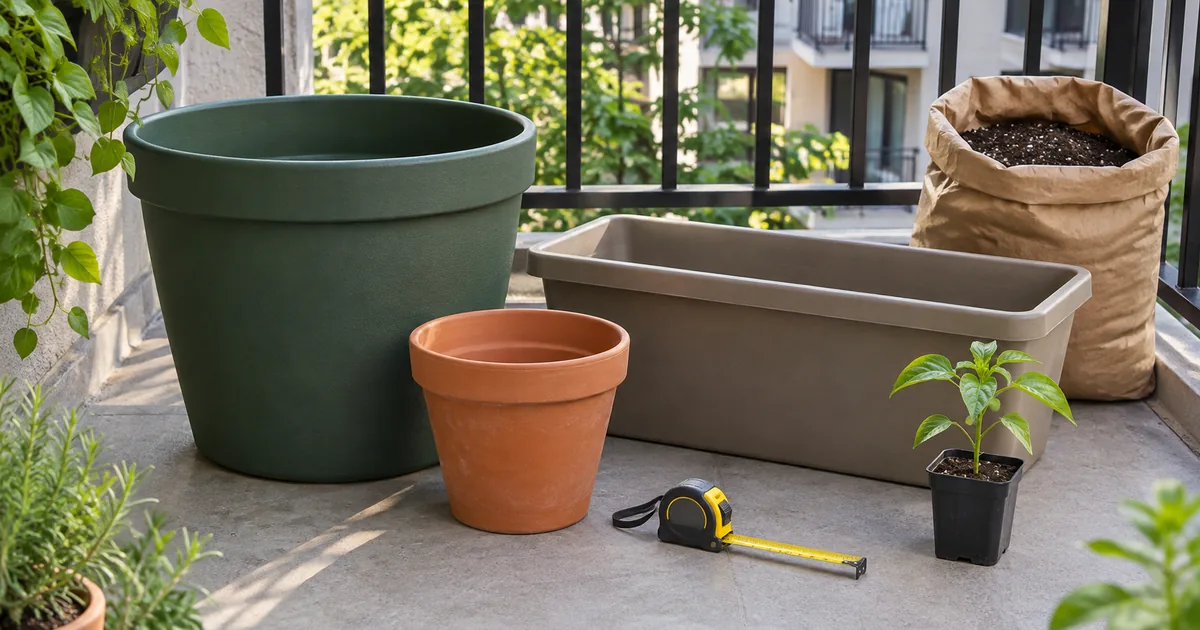
Imagine a gardener choosing a container for one pepper plant. This is a fictional shopping exercise, not a test of actual products. The gardener uses the Wisconsin starting guidance above and then checks the chosen pepper variety before purchase.
| Illustrative option | Stated usable capacity and depth | Initial decision |
|---|---|---|
| Pot A: compact decorative pot | 10 liters; 20 centimeters deep | Reject for this pepper plan: too little volume and depth |
| Pot B: broad, deep planter | 22 liters; 35 centimeters deep | Keep as the candidate, subject to variety and placement checks |
| Pot C: wide shallow trough | 22 liters; 16 centimeters deep | Reject for this plan: the volume hides insufficient depth |
Pot C initially looks attractive because it has the same capacity as B and a wide planting surface. Comparing depth changes the decision. Pot A fits the seedling today, but that is not the relevant standard for the mature plant.
Complete the decision rather than stopping at the chart
The gardener confirms that B’s figure describes growing volume, checks its drainage, and measures its footprint against the balcony plan. There must also be room for watering, inspection, and any support the variety needs. If the container blocks the door or creates an unsafe placement, it is not a usable choice.
The outcome is a conditional choice of B, not a claim that twenty-two liters is the perfect size for all peppers. Our balcony vegetable garden ebook provides a related container-sizing chart and starter layouts for developing the rest of the plan.
Which material and drainage details deserve attention?
Container material changes handling as well as appearance. Unglazed terracotta and lightweight plastic have different empty weights and moisture behavior. Compare the complete arrangement rather than assuming the heavier-looking option is always better.
The RHS guide to vegetables in containers identifies inadequate root space and drying out as practical problems. A very small pot may demand more frequent attention, which matters if your schedule makes regular checking difficult. Material is one part of that decision, alongside weather, plant size, and exposure.
Choose appropriate drainage and a suitable container-growing medium. Adding stones to the bottom is not a substitute for drainage holes, and it takes away growing space. Check the instructions for a self-watering system instead of treating its reservoir as extra root volume.
Plan where drained water will go, especially above a neighbor’s balcony. Keep drainage openings functional and avoid leaving ordinary pots sitting indefinitely in collected water. Any saucer, stand, or tray should work with the container’s intended design and your building’s requirements.
What should you check before buying several containers?
Place temporary markers on the floor for each proposed footprint. Open the door, walk through the space, and imagine reaching the farthest plant with a watering can. A layout that works on paper may leave awkward gaps or inaccessible corners.
- Confirm the crop, mature variety, and intended number of plants.
- Record the chosen depth, volume, and spacing guidance with its source.
- Check usable dimensions and what the capacity includes.
- Confirm drainage, support needs, and a practical watering arrangement.
- Review building rules and load limits where relevant; do not guess structural capacity.
- Buy a manageable first set and keep the product details for comparison.
Remember that growing medium, water, plants, and supports add weight. Do not use an empty container’s weight as a guide to its filled load, or plan on carrying heavy planted pots around every day. Keep containers securely inside the permitted growing area.
Leave space to learn. One correctly chosen container lets you observe moisture, growth, and access before expanding. Record the variety and container specifications together so that next season’s decision starts from useful evidence rather than a memory of what looked large enough.
Conclusion
Choose one crop today and write down its mature container requirements. Compare usable volume, depth, drainage, and placement for two or three options. Buy only after those checks agree. The best first container is one that fits both the plant and the space you can safely maintain.
Frequently Asked Questions
Can I use a grow bag instead of a rigid pot?
Yes, if its usable size, drainage behavior, and placement suit the crop. A bag’s nominal capacity does not answer every practical question: check its filled shape and how you will support or move it. Keep the same depth, volume, variety, and access checks you would use for a rigid container.
Does a bigger container mean I should plant more vegetables in it?
Not automatically. Extra root space may support one plant without justifying another. Follow crop spacing guidance and consider the mature canopy and supports. If you want a mixed planting, use a plan that accounts for the specific combination rather than dividing the container’s volume by a minimum figure.