A high-protein breakfast without eggs can start with Greek yogurt, cottage cheese, tofu, or a combination of oats and a substantial protein ingredient. Choose that ingredient first, then add fruit or vegetables and a grain you enjoy. Check the label for the portion you will actually eat, since similar-looking products can contain different amounts of protein.
The five options below suit different mornings, from a cold bowl to a hot savory plate. You will also find one complete yogurt-and-oat assembly, a tofu method, and a worked label comparison. The goal is to make breakfast easy to repeat with ordinary groceries and enough variety to keep it appealing.
Key Takeaways
- Start with a substantial portion of a protein food.
- Treat oats, fruit, seeds, and toast as parts of the meal with different jobs.
- Compare package information using the same portion size.
- Choose the preparation that fits your available morning time.
Which protein foods can replace eggs at breakfast?
Greek yogurt and cottage cheese work well when you want something you can spoon into a bowl. Firm tofu gives you a savory cooked option, while beans can form part of a toast or breakfast bowl. Canada’s Food Guide includes dairy, beans, and soy foods among its protein-food choices.
Build around an ingredient you enjoy in a realistic portion. A small decorative spoonful of yogurt on a large bowl of cereal plays a different role from a substantial yogurt base. The same goes for a sprinkle of seeds compared with a portion of tofu. Start with the base, then decide what would make it a breakfast you want to eat.
If a texture puts you off, adjust the preparation before abandoning the ingredient. Blend cottage cheese until smooth, add crisp vegetables to soft tofu, or keep crunchy toppings separate from yogurt until you sit down. These are useful changes when a breakfast seems convenient on paper but you keep leaving it unfinished.
How do you build a yogurt-and-oat bowl?
Use one portion as your starting point
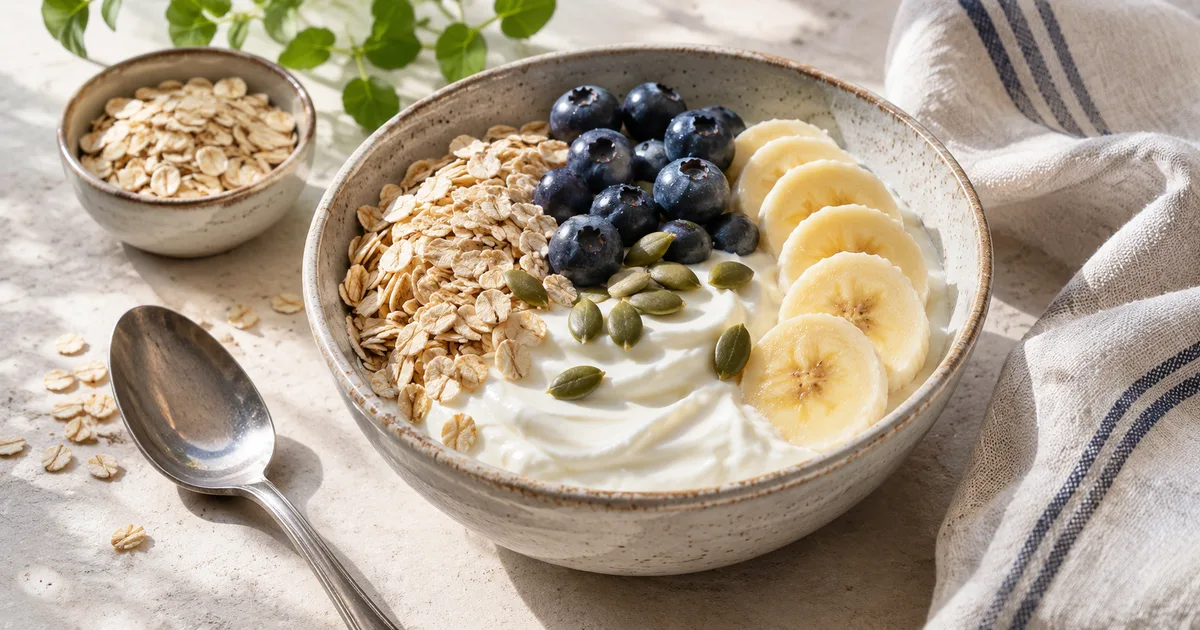
For one bowl, put 200 grams of plain Greek yogurt in a dish. Stir in 30 grams of rolled oats and add 80 grams of berries or chopped fruit. Finish with 10 grams of pumpkin seeds and a little cinnamon if you like it. These quantities are a practical assembly example. The protein total depends on the ingredients you choose.
If you like a loose texture, stir in a spoonful of milk or a suitable alternative at a time until it feels right. For a thicker bowl, leave the liquid out. Taste before adding a sweetener. Ripe banana can make the bowl sweeter, while berries and plain yogurt keep a sharper flavor.
Choose whether the oats should stay chewy
You can eat the bowl after mixing if you enjoy the oats’ texture. For softer oats, mix the yogurt, oats, and a little liquid in a covered container the night before and refrigerate. Add the fruit and seeds when you are ready to eat so the textures stay distinct.
Suppose you make it once and find the bowl too dense. The next morning, keep the same yogurt portion, reduce the oats slightly, and add a little more liquid. You have changed the texture while preserving the ingredient you chose as the main protein source. Record the version you liked so the next bowl takes less thought.
What if you prefer a hot savory breakfast?
Try a simple tofu scramble with toast. For one generous starting portion, crumble about 180 grams of firm tofu with a fork. Slice a small tomato and a handful of spinach or another quick-cooking vegetable. Have pepper, a little salt, and paprika ready before you heat the pan.
Warm a little oil in a skillet over medium heat. Add the tomato and cook until it begins to soften, then add the tofu. Stir gently as it heats and some of its moisture evaporates. Add the greens near the end and cook until wilted. Season to taste and serve hot with toast.
The tofu is already an ingredient you can season in many directions. Paprika and tomato make a familiar savory combination. Cumin and a little chopped coriander give you another version. Add crunchy cucumber alongside the scramble if the soft texture needs contrast. Choose one flavor direction for the first attempt so you can tell what to adjust.
If you are choosing among plant-based options, compare tofu packages as carefully as yogurt. Water content and brand affect the information on the label. This registered dietitian’s egg-free breakfast collection offers other formats to explore, including sweet and savory choices. You can keep the same protein-first assembly principle when adapting one.
Which options fit your morning?
| Breakfast | Main protein ingredient | What to do ahead | Useful variation |
|---|---|---|---|
| Yogurt-and-oat bowl | Greek yogurt | Mix the base the night before if desired | Change the fruit and spice |
| Savory cottage cheese toast | Cottage cheese | Wash and chop the vegetables | Use tomato, cucumber, and herbs |
| Tofu scramble with toast | Firm tofu | Measure spices and prepare vegetables | Change the vegetables and seasoning |
| Overnight oats with yogurt | Greek yogurt plus milk if used | Combine and refrigerate overnight | Add fruit just before eating |
| Bean-and-yogurt breakfast bowl | Beans and plain Greek yogurt | Rinse canned beans and organize toppings | Use lemon, cumin, and chopped tomato |
Choose according to what you can do before leaving home. If the pan usually stays cold on a weekday, the yogurt bowl is the more repeatable starting point. If a warm meal makes breakfast more appealing, prepare the tofu ingredients so the cooking sequence is short and clear.
Healthline’s egg-free breakfast recipes also show that several formats can work, including yogurt, cottage cheese, and oats. Use a recipe’s quantities when following its published nutrition figures. Changing the portion or swapping the base calls for a fresh label calculation.
For the savory cottage cheese toast, spread a substantial portion of cottage cheese over sturdy toast and add chopped vegetables. If you prefer a smoother spread, blend the cheese first. Keep wet tomato separate until assembly so the toast holds its texture. A little black pepper and herbs can finish the meal without a long ingredient list.
How can you compare protein labels correctly?
Read both the protein amount and the serving size. One tub may show values per 100 grams, while another reports a single 170-gram serving. Comparing the printed numbers directly would compare different portions. First convert them to the portion you intend to use.
In this illustrative label example, yogurt A lists 10 grams of protein per 100 grams and yogurt B lists 6 grams per 100 grams. A 200-gram portion would supply 20 grams from A or 12 grams from B. These are example labels for practicing the calculation, rather than values assigned to every Greek yogurt.
Now apply the method to your actual package. Divide your portion by the label’s reference portion, then multiply by the listed protein. Add the contribution of other ingredients only if you need a meal total. A measured yogurt base is easier to calculate than a bowl assembled from unmeasured spoonfuls.
A dairy-free swap can change the result substantially. Look at the replacement’s ingredients, serving size, and protein information before assuming it will behave like dairy yogurt. Choose its flavor and texture as well. You are building a breakfast you will use, and its label gives you the information needed to adjust the portion.
How do you plan three mornings with less preparation?
Pick two bases and share the additions. You could buy Greek yogurt and firm tofu, then use oats, berries, tomatoes, and spinach in different combinations. Plan a yogurt bowl for a rushed morning, tofu scramble for a morning with time at the stove, and overnight oats for the next early start.
Keep the plan focused on ingredients you already use elsewhere. Tomatoes and spinach can also go into dinner, while the oats stay in the cupboard for another breakfast. For more meal ideas, The High Protein Recipe is a related BestDigiBooks cookbook. You can connect breakfast planning with these easy dinner ideas without cooking the same meal twice a day.
Prepare only what makes the next morning easier. Washing fruit, setting out a bowl, or measuring oats may be enough. Refrigerate perishable ingredients and assembled overnight oats promptly, and follow the products’ storage instructions. Keep the crunchy finishing ingredients dry and separate until serving.
Conclusion
Choose one cold option and one hot option from the table. Try the yogurt bowl or tofu scramble, check the protein information for your chosen portion, and change one texture or seasoning detail after the first attempt. Keep that version as your starting breakfast for the next busy morning.
Frequently Asked Questions
Do I need protein powder for these breakfasts?
The options here can be made with ordinary foods. If you already use a powder, follow its serving instructions and include its contribution in any calculation. Start with the taste and texture of the food-based version so you can decide whether an addition helps.
Can I make the yogurt bowl without dairy?
Yes, using an alternative you enjoy. Compare its protein content and adjust the portion or combine it with another protein ingredient where useful. Plant-based products vary considerably, so the package is a better guide than the word yogurt on its own.