To read aloud to children, choose a story they are interested in, sit where you can share it comfortably, and read slowly enough for the meaning to settle. Pause when a child wants to respond or when an important moment deserves space. You do not need a special voice, a performance, or a question after every page.
This guide is for a parent or caregiver sharing stories with an early-years or primary-aged child. It includes an original example and a flexible ten-minute session. The aim is a shared reading experience you can adjust to the child in front of you, rather than a lesson you must complete.
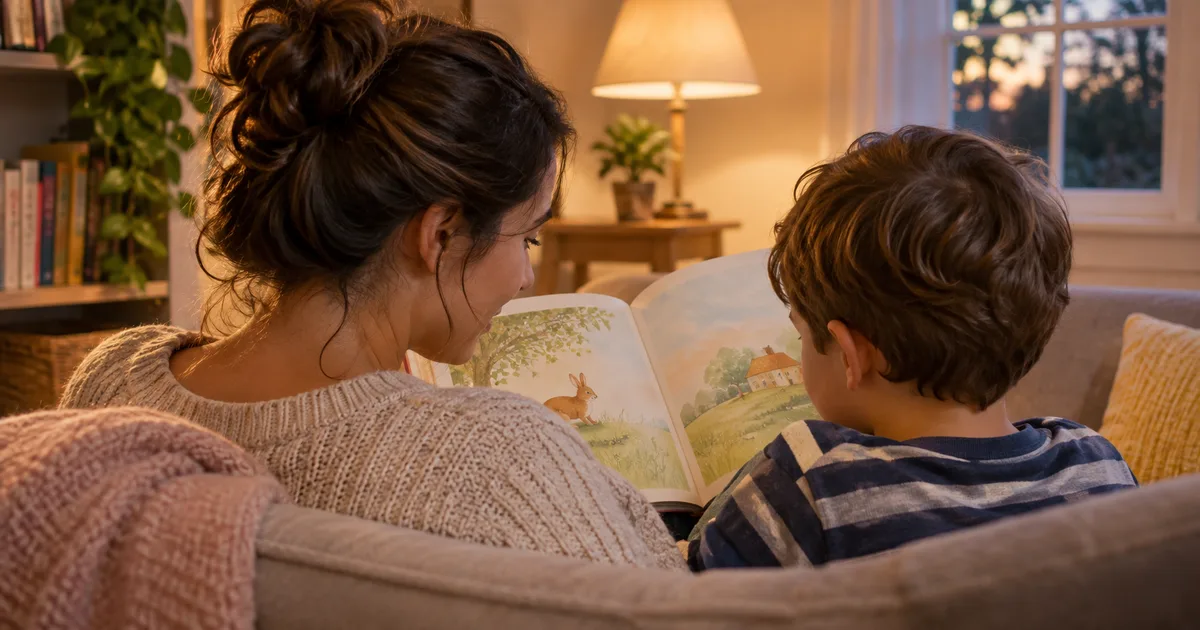
Key Takeaways
- Preview the story and consider the child’s interests.
- Let the child see the pictures when they matter to the story.
- Invite a response without requiring one.
- Shorten or stop the session when the shared experience needs a change.
Which book should you choose for reading aloud?
Begin with something the child wants to explore: a familiar character, an interesting animal, a small adventure, or a funny situation. Offer two suitable choices if deciding is difficult. Choosing between two books is easier than surveying an entire shelf when everyone is tired.
Read a little of the book yourself before the session. Notice whether the sentences work well when spoken and whether the story contains anything you want to discuss beforehand. Consider its length and emotional tone as well as a printed age suggestion. Two children of the same age can want very different stories.
BookTrust’s read-aloud guidance encourages familiarity with the book and genuine enthusiasm for reading it. Choose something you can share comfortably, including stories from your own language or family reading tradition. You can explain an unfamiliar word naturally when it becomes relevant.
During the holiday season, 24 Cozy Christmas Stories to Read Together is one BestDigiBooks collection to browse. Preview the individual story for your child before choosing it. A collection gives you options; it does not mean every story suits every reader or mood.
How can you prepare without rehearsing a performance?
Find a position where both of you can see and hear comfortably. With a picture book, leave the pictures visible long enough to explore. With a text-led story, the child may prefer listening while drawing quietly or holding a familiar toy. Ask what makes it comfortable instead of assuming one posture is essential.
Put away avoidable distractions and have the book ready before inviting the child over. If you use an ebook, set a readable text size and reduce interruptions using the device’s ordinary settings. Keep the focus on the shared story rather than switching between the book and unrelated apps.
Prepare one opening, one pause, and one ending
Choose a simple opening invitation, such as looking at the cover together. Identify one scene where a pause might help. Finally, notice a possible stopping point in case you do not reach the end. This small preparation is enough for an ordinary home session.
PBS KIDS’ home-storytime guide suggests previewing books for pacing and opportunities to join in. Props and activities are optional. A child who wants the story itself does not need a craft project or an elaborate theme before reading can begin.
What makes your voice easy to follow?
Use a comfortable speaking voice and give sentences room to finish. Punctuation can guide a pause, but also listen to the meaning. A character making a careful decision may need a different pace from someone hurrying down a path. Small changes in speed and emphasis can make that distinction clear.
Try a modest contrast between two characters if you enjoy it. One might speak briefly and another more hesitantly. You do not have to maintain a different accent for every person in the book. If a voice becomes distracting or hard to sustain, return to your usual voice.
Let quiet moments remain quiet. A suspenseful pause can invite attention without raising the volume. A funny line may need a moment for the child to react before you continue. Watch for whether your delivery is helping the child follow the scene.
Strathcona County Library’s family-reading suggestions include actions, questions, songs, and props as different ways to share a book. Choose one approach that fits the story and the child. Using all of them at once may interrupt the experience you intended to create.
When should you pause and invite a response?
Leave room for a response without demanding one. An open invitation can help a child explore a character’s choice. Constant checking can make a story feel like a test. Try a pause where the answer matters to the story, then follow the child’s level of interest.
Imagine this original scene: Lila finds a small red mitten beside a closed garden gate. Snow is beginning to cover the path. She can leave the mitten where it is or carry it to the house with the lighted window. No owner is visible yet.
At the choice, ask, “What could Lila do next?” Suppose the child says she should hang it on the gate so the owner can find it. Respond to that reasoning: the mitten would stay visible. Then continue the story, where Lila notices a child retracing footprints and calls out to ask about the mitten.
The example has a concrete result. The child proposed a sensible alternative, and the story supplied another piece of information. There was no need to mark the prediction wrong. You can briefly compare the choices after the scene or simply keep reading if the child wants to know what happens.
- A prediction invites the child to imagine a possible next event.
- A comment can acknowledge a detail the child noticed.
- A short explanation can clarify a word without opening a long lesson.
- Silence can give the child time to follow the story privately.
What does a ten-minute read-aloud look like?
Use ten minutes as an example of a manageable window, not a rule about how long a child should listen. Choose a short text or a chapter with a clear stopping place. Tell the child whether you hope to finish the story or pause at a particular point.
| Part of the session | What you can do | What to notice |
|---|---|---|
| Opening minute | Look at the cover and name the story | Does the child want this book now? |
| Next few minutes | Read the opening at a comfortable pace | Can the child follow and see what matters? |
| Middle | Pause at one meaningful choice or discovery | Does a response come naturally? |
| Closing minutes | Finish the scene or use a planned stopping point | Is there room for one final thought? |
| After reading | Offer a choice for next time | Would the child like more, a repeat, or something different? |
If the child becomes absorbed, you may continue when time permits. If attention moves elsewhere, finish a sentence or scene and check whether to stop. You can keep a bookmark ready without presenting an unfinished session as a failure.
A simple closing invitation is to choose a favorite moment. Accept an unexpected answer, including a detail from an illustration rather than the main plot. That tells you something about what the child noticed and can guide the next choice.
For families who enjoy a seasonal routine, our book-advent-calendar guide explains how to organize existing books. Use the organizational idea only if it helps. Shared reading does not require buying a new book for every session.
How do you adapt when children want different things?
Siblings may prefer different lengths, topics, or ways to join in. Start with a story both can access, then give each a small choice: one chooses the opening book and the other chooses the next session’s title. Avoid giving the more fluent reader responsibility for correcting everyone else.
If one child interrupts with related ideas, acknowledge the thought and agree on when to return to it. You might finish the current page first. If the interruption signals confusion, clarify the confusing point before continuing. These situations need different responses.
A child who dislikes questions may enjoy listening straight through. Another may want to look closely at every picture. Adjust the amount of conversation rather than treating either preference as the wrong way to enjoy a story. Ask what they would like to do differently next time.
If two languages are part of family life, you can choose the language you are comfortable reading or explain a phrase in another shared language. Keep the story coherent and respond to the child’s questions. There is no need to translate every sentence if that interrupts the experience you both enjoy.
Conclusion
Choose one suitable story and preview its opening, one meaningful pause, and a possible stopping point. Read it together without requiring a response at each stage. Afterward, let the child choose whether next time should bring the same story, a new one, or a different way of sharing it.
Frequently Asked Questions
Is it okay to read the same story repeatedly?
Yes. You can share a familiar favorite without making every reading identical. On one occasion, enjoy the story straight through; another time, notice a picture or a repeated phrase the child likes. Follow their interest rather than requiring a new activity to justify rereading.
Should I keep reading aloud once my child can read independently?
You can continue if you both enjoy it. Independent reading and listening together offer different experiences. Let the child choose a shared book or a passage they want you to read, and keep their own reading time available as well. Reading together does not have to become a test of what they can read alone.